Diabetic foot syndrome is one of the most serious — and at the same time most preventable — complications of diabetes. Research shows that correct daily care cuts the risk of ulcers by a factor of four. Most of what's needed takes no more than 5 minutes a day.
This article is for patients with T1D and T2D, family caregivers, and anyone who wants to keep their feet healthy.
Why feet are a risk zone in diabetes
Long-standing hyperglycemia damages three systems:
- Nerves (diabetic neuropathy). The foot loses sensitivity to pain, temperature, and pressure. You can miss a pebble in your shoe, a burn from a hot water bottle, a corn from tight footwear.
- Vessels (diabetic angiopathy). Worse blood flow — slower healing of any wound.
- Immunity. Elevated glucose is fertile ground for bacteria. A small scratch on a healthy person closes in 3 days. On a patient with poorly controlled diabetes it can turn into a purulent ulcer in a week.
Core principle
For a person with diabetes, no foot issue is a small issue. A callus, a heel crack, hardened skin, an ingrown nail — each demands attention, not "it'll heal on its own".
Daily inspection — 2 minutes
Every evening before bed:
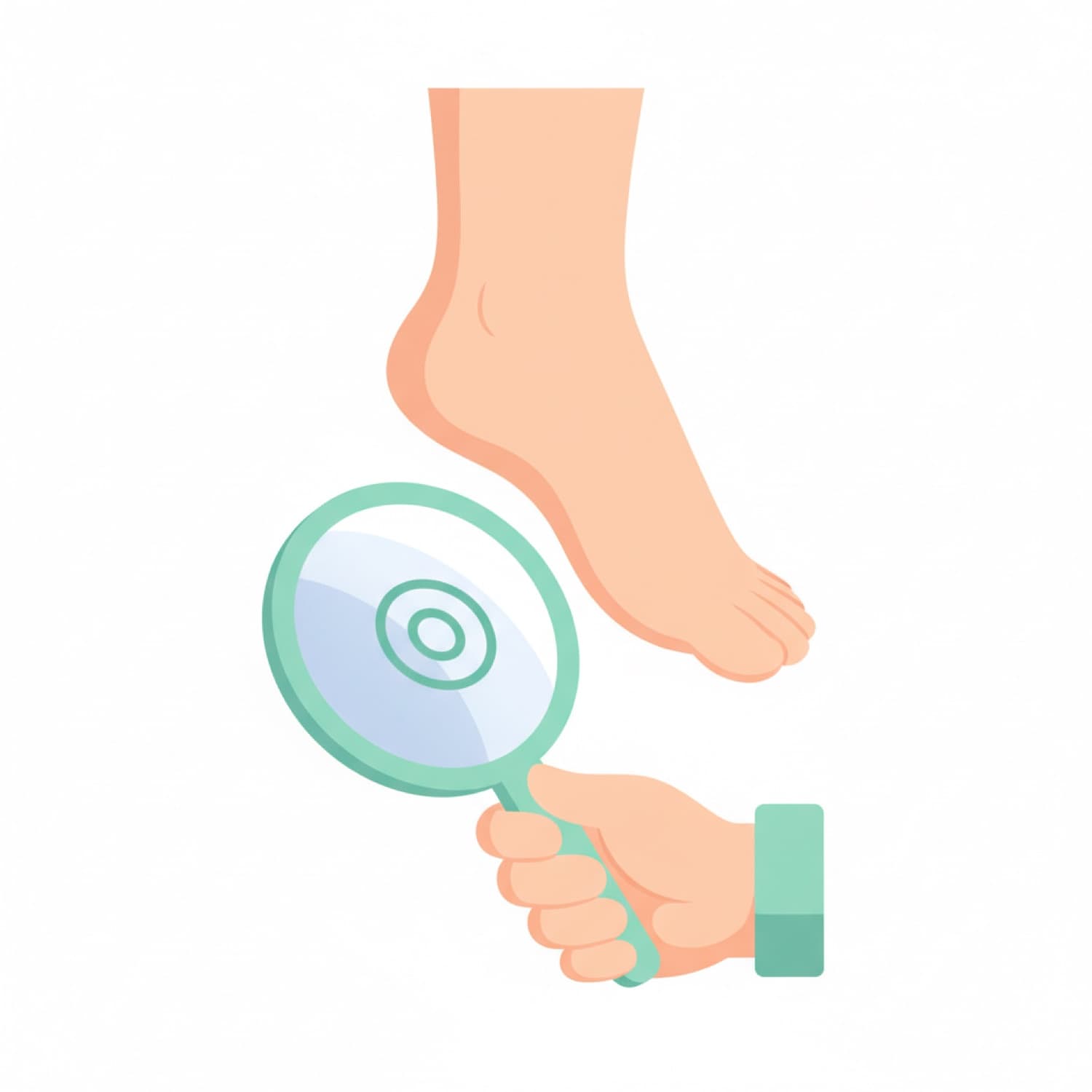
- Look at both feet — top, bottom, between the toes, heels.
- If your back doesn't bend, use a mirror on the floor or ask a family member.
- Look for: redness, cracks, blisters, new calluses, abrasions, nail-colour changes.
- Feel the foot — any warm or painful spots (even though pain may be absent).
If you find something new, photograph it to track changes over time.
Washing correctly
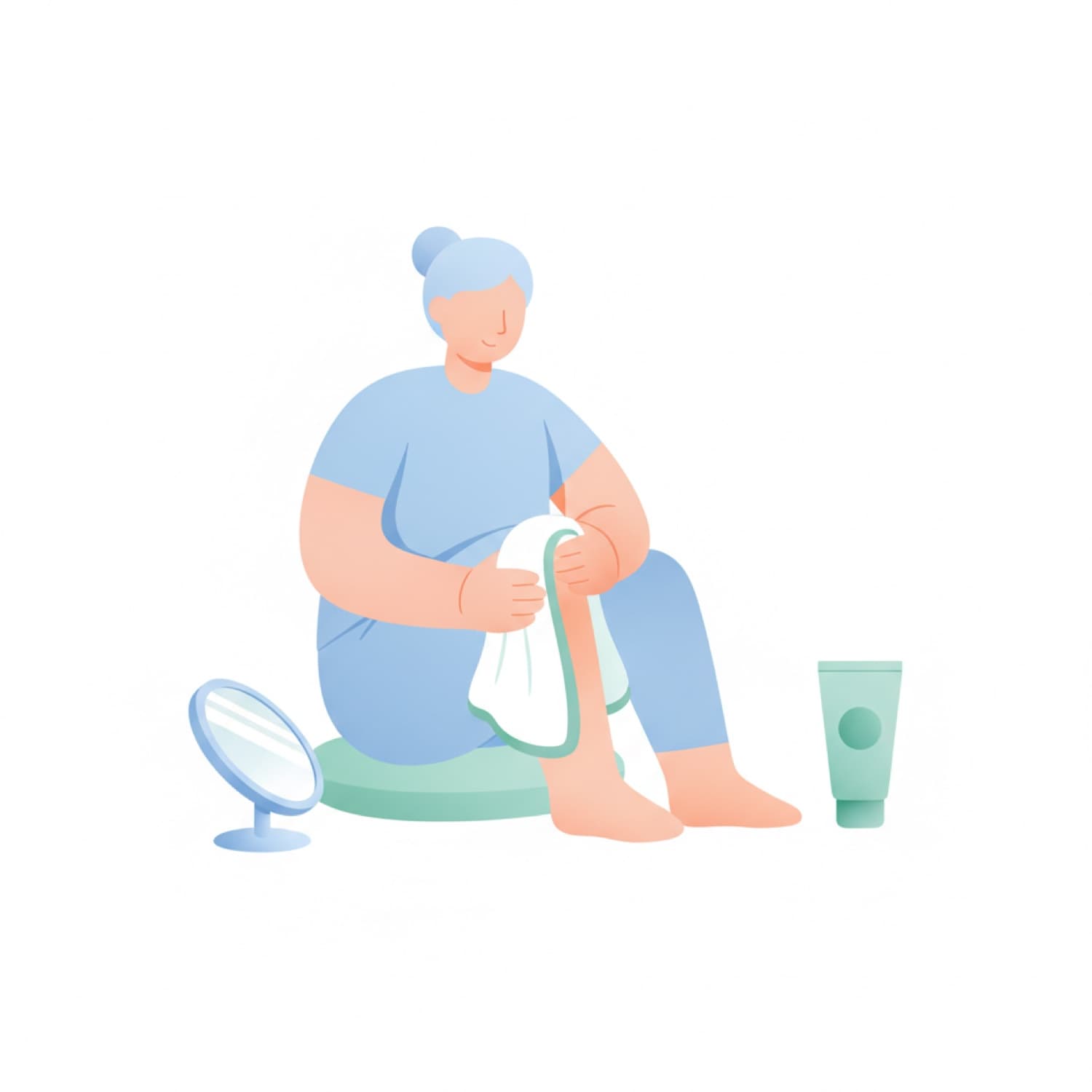
- Water temperature: always check with your elbow or a thermometer (32–35°C). Your foot may not feel it — and you'll burn yourself without noticing.
- Time: 5 minutes, no longer. Long soaks soften the skin and lead to cracks.
- Soap: neutral, fragrance-free. Dry skin is the norm in diabetes; aggressive surfactants finish it off.
- Drying: thoroughly, especially between the toes. A damp interdigital space is a breeding ground for fungus.
Moisturising — but not everywhere
After washing and drying, apply a cream with 5–10% urea on heels, the top of the foot, and the lower leg. For calluses use a 20–40% urea keratolytic.
NO cream between the toes
This is often forgotten. Cream between the toes creates a damp environment where fungus thrives. Between the toes — only dry skin and talc.
Trimming nails
- Cut straight across, don't round the corners. Rounded corners → ingrown nail → infection.
- Use a file rather than scissors if the nail is brittle.
- If your vision is poor or sensitivity is reduced, let a family member or a podiatrist do it. One nick — three weeks of treatment.
Footwear — half the battle
Don't wear:
- Flip-flops or sandals (interdigital injuries)
- Thin-soled sandals (microtrauma)
- Heels above 4 cm (forefoot overload)
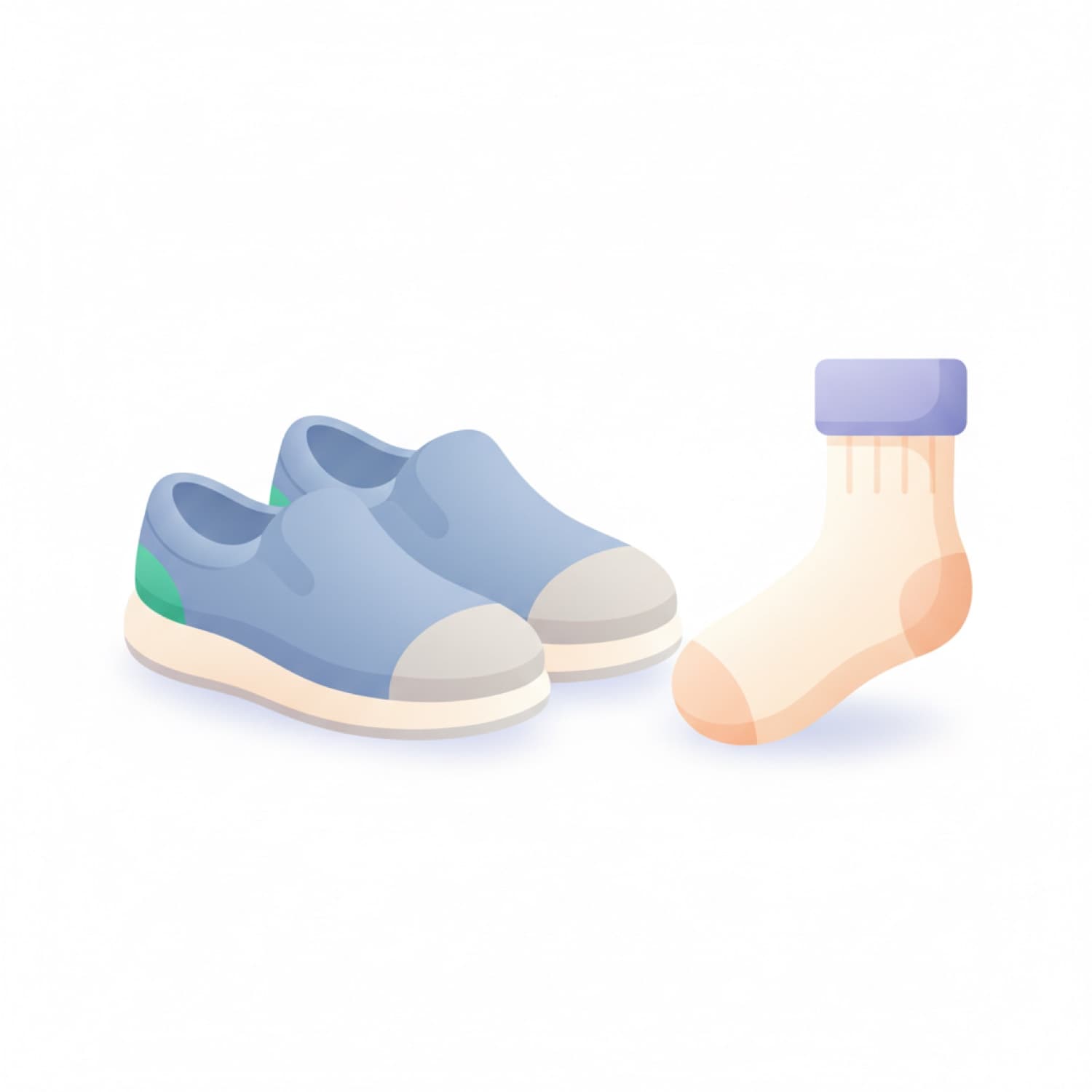
- Tight shoes; break in new shoes only 2 hours a day in the first week
- Socks with rough seams or tight elastic
Do wear:
- Soft leather, no internal seams over the toes
- Seamless light-coloured socks (so blood and discharge are visible)
- Size with 1 cm spare, generous width
- Orthopaedic insoles, especially with foot deformity
Before putting shoes on, run your hand around the inside — for sand, pebbles, folded insoles. Five seconds.
If a wound appears
Don't wait. Not "it'll heal on its own". Take action:
- Rinse with chlorhexidine solution or saline. Iodine and brilliant green are not needed — they make it harder to monitor the wound.
- Apply a clean non-adherent dressing. Modern alginate gels (for example Flaminal Hydro) create an optimal healing environment and don't damage healthy tissue at dressing change.
- Off-load the foot. Any weight on the affected area slows healing.
- Contact your endocrinologist or surgeon within 24 hours if the wound:
- is larger than 1 cm
- is deeper than the surface layer
- has spreading redness
- has discharge or an unpleasant smell
- hasn't healed in 3 days
When to see a doctor immediately — same day
- Sudden pain in the foot or calf
- The foot is cold, pale, or bluish
- Unexplained fever
- Purulent discharge from a wound
- Black or grey skin patches
- Sudden swelling
Family checklist
If someone in the family has diabetes, agree in advance:
- [ ] Who checks the feet if the patient can't do it themselves
- [ ] Where the cream, scissors, and dressings are kept
- [ ] Endocrinologist and podiatrist contacts — on the fridge
- [ ] The action plan if a wound appears — who calls, who drives
- [ ] What hemostatics and wound-healing materials are in the kit
5 minutes a day is prevention. An hour in hospital is too late.