Blood is frightening — but in most household situations actual blood loss is minimal, and the right five-minute response settles things completely. Let's walk through the three most common scenarios: a knife cut, a child's scrape, bleeding after a dental visit.
Universal sequence
- Stay calm. At the sight of blood the heart races, blood pressure jumps — none of that helps the injured person. If you're panicking, sit down for 10 seconds and breathe.
- Rinse the wound with clean running water for 1–2 minutes. Remove any visible dirt. Hydrogen peroxide is not needed for minor cuts — it actually slows healing.
- Press with a clean pad (gauze, clean cloth, bandage). Pressure is the main action, everything else is secondary. Hold for 3–5 minutes without lifting.
- If blood soaks through the cloth, don't remove the first layer — put a second one on top and keep pressing.
- Raise the limb above the heart if the wound is on an arm or leg — lowers vascular pressure.
When to call emergency services right away
If pressure for 10 minutes doesn't stop the bleeding, if blood spurts in a pulsating stream, or if the wound is deeper than 5 mm — call emergency services. That's no longer a household injury.
Scenario 1: a kitchen knife cut
The most common household injury. Usually a shallow cut on the index finger or thumb.
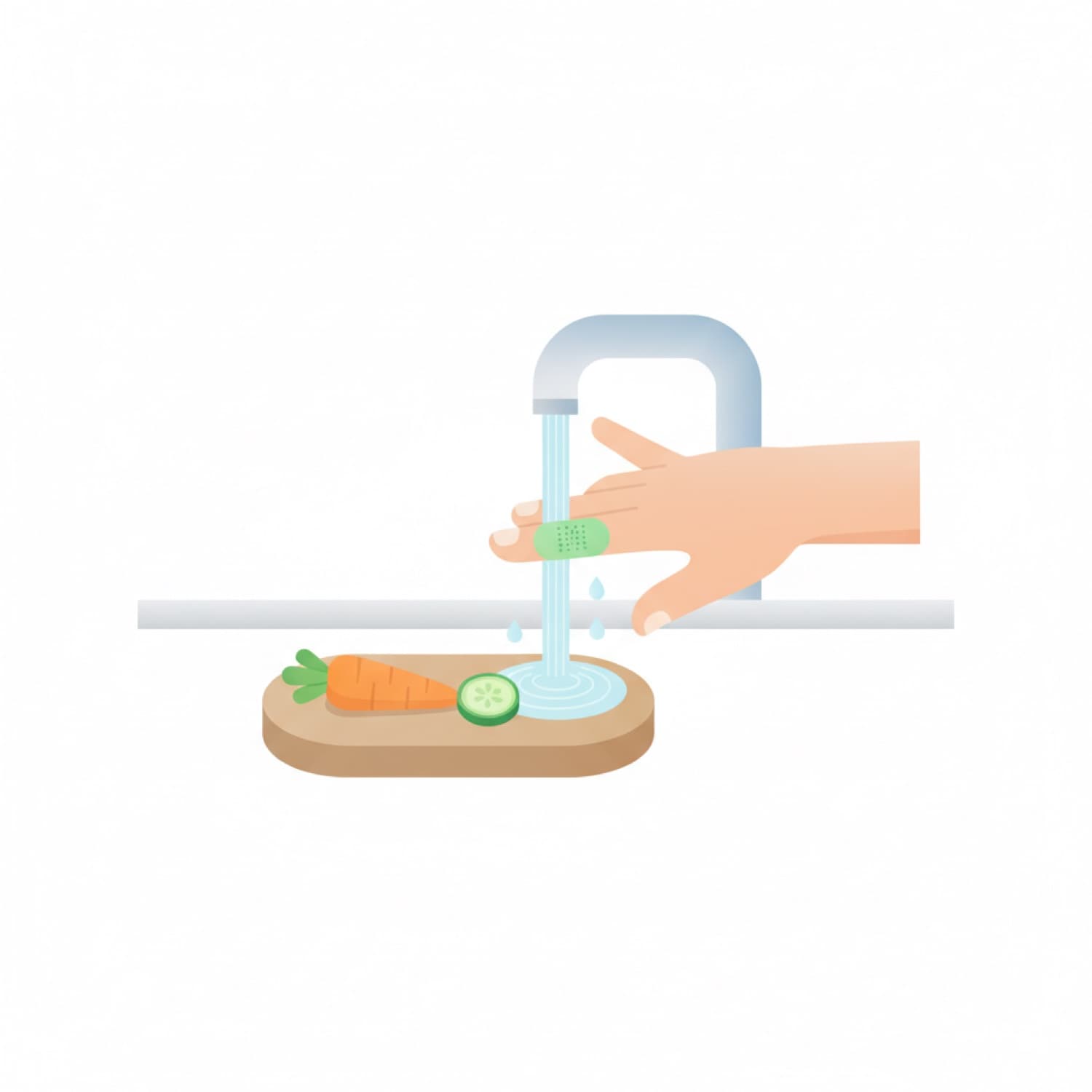
- Put your hand under cold running water — this reduces blood flow and washes off food residue from the blade.
- Press with gauze or a clean napkin, raise the hand.
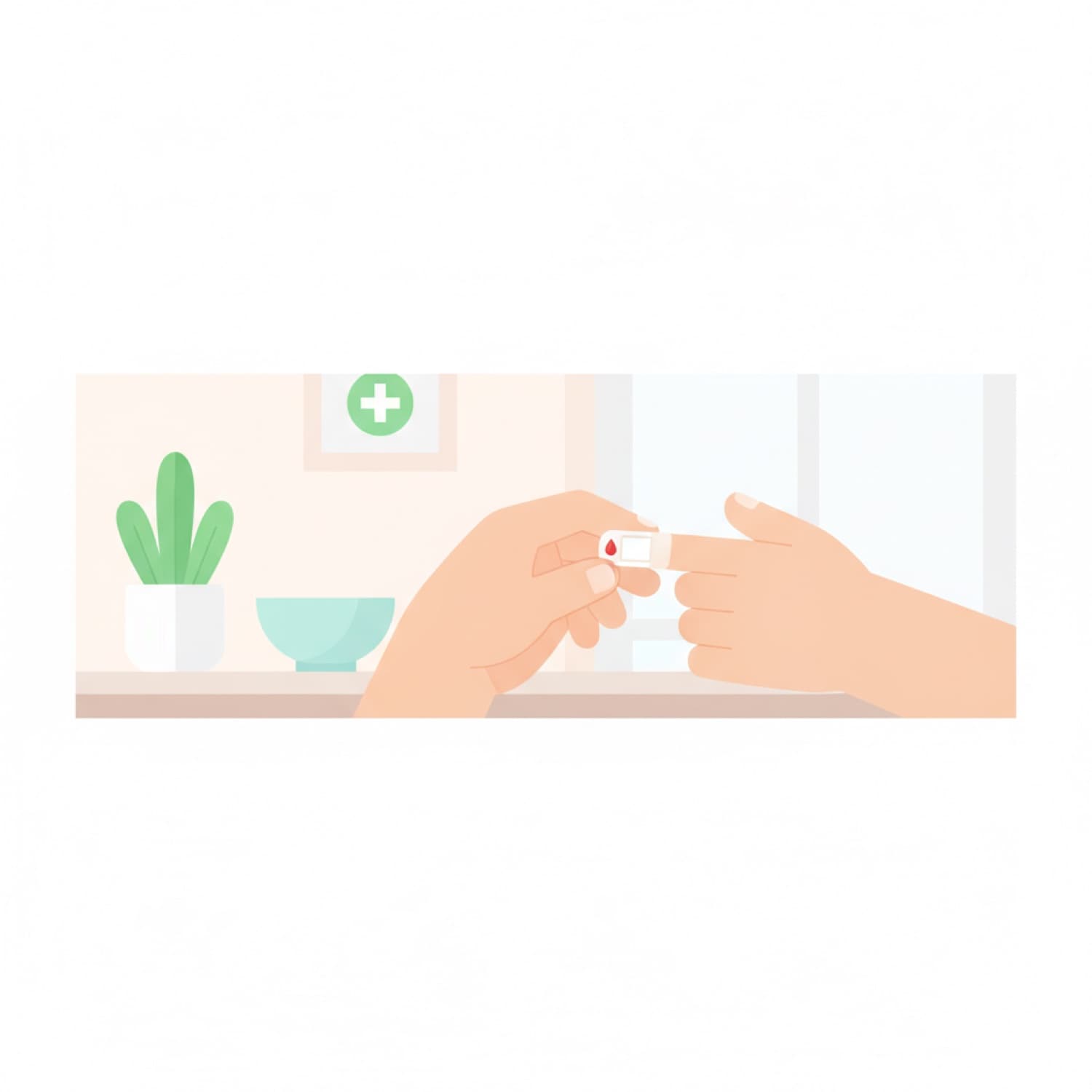
- Once bleeding stops — clean with an antiseptic (chlorhexidine, miramistin) and apply a plaster.
- Change the plaster daily or when it gets wet.
When you need stitches: if the cut has opened up and you can see fatty tissue or muscle, if it's longer than 2 cm, or if it's on the face — see a doctor within 6 hours.
Scenario 2: a child scraped a knee or elbow
Children fall, and their blood clots more slowly than an adult's — it can feel like the bleeding goes on forever. Usually it's nothing serious.
- Sit the child down and try to calm them — crying raises heart rate and bleeding.
- Rinse with water. Don't put alcohol or iodine directly into the wound — it hurts and slows healing. Iodine can go around the wound, not in it.
- Press with clean cloth.
- Once bleeding stops, apply a wound-healing ointment and a breathable plaster.
If there's a pebble, a piece of glass or hair stuck in the wound — don't try to pull it out with tweezers, you can make it worse. That's a job for the emergency clinic.
Scenario 3: persistent bleeding after a dental extraction
Dentists always send you home with a cotton pad after extraction — bite down and hold for 30 minutes. Sometimes blood keeps oozing past the hour mark — not critical, but uncomfortable.
What to do:
- Don't spit — that flushes the clot out of the socket and bleeding restarts. Swallow saliva gently.
- Bite down on a fresh sterile pad for another 20–30 minutes.
- No hot drinks, no smoking, no sauna for 24 hours — vasodilation increases bleeding.
- If bleeding is heavy for more than 2 hours — call your dentist.
When home measures aren't enough
It's worth keeping a topical hemostatic in the home kit for:
- bleeding in people on anticoagulants (warfarin, Xarelto, Eliquis) — their blood clots more slowly
- frequent nosebleeds
- patients with diabetes whose wounds bleed longer than usual
- people with hemophilia or other clotting disorders
Modern biocompatible hemostatics (for example, BloodSTOP iX) work by a simple principle: placed on a wound, within 2 minutes they form a dense gel film that stops bleeding and gradually dissolves on its own. Nothing to remove.
What belongs in a home first-aid kit
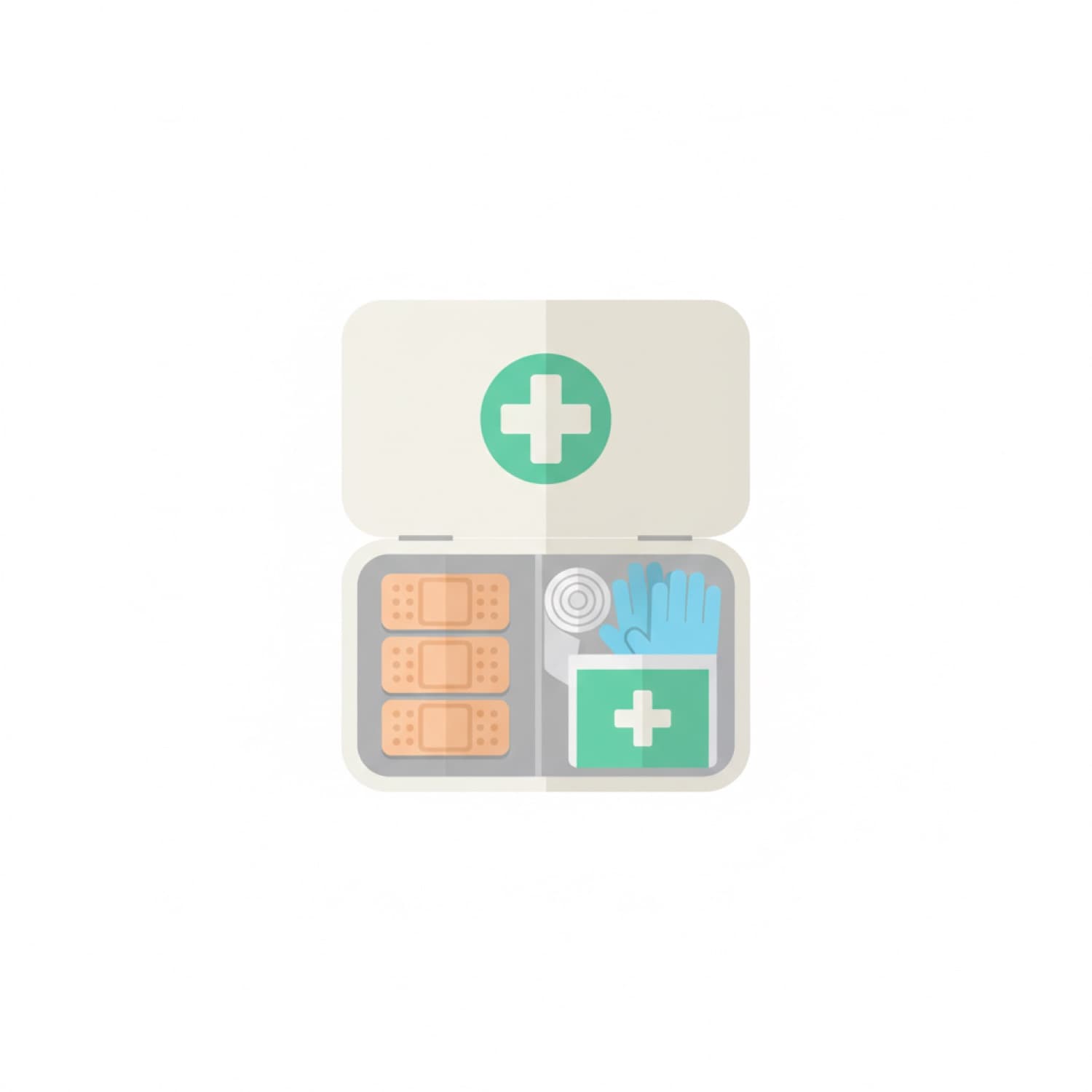
- Sterile gauze pads, 5×5 cm and 10×10 cm
- Elastic or self-adhesive bandage
- Chlorhexidine or miramistin for antisepsis
- Plasters in several sizes
- A hemostatic dressing / gel — especially if someone in the family is on anticoagulants or has diabetes
- Disposable gloves — to avoid introducing infection into someone else's wound
This kit handles 95% of household situations. The other 5% are for emergency services and the emergency clinic.