
CGM for type 2 diabetes
Especially useful for insulin-treated patients and during selection or titration of glucose-lowering drugs.
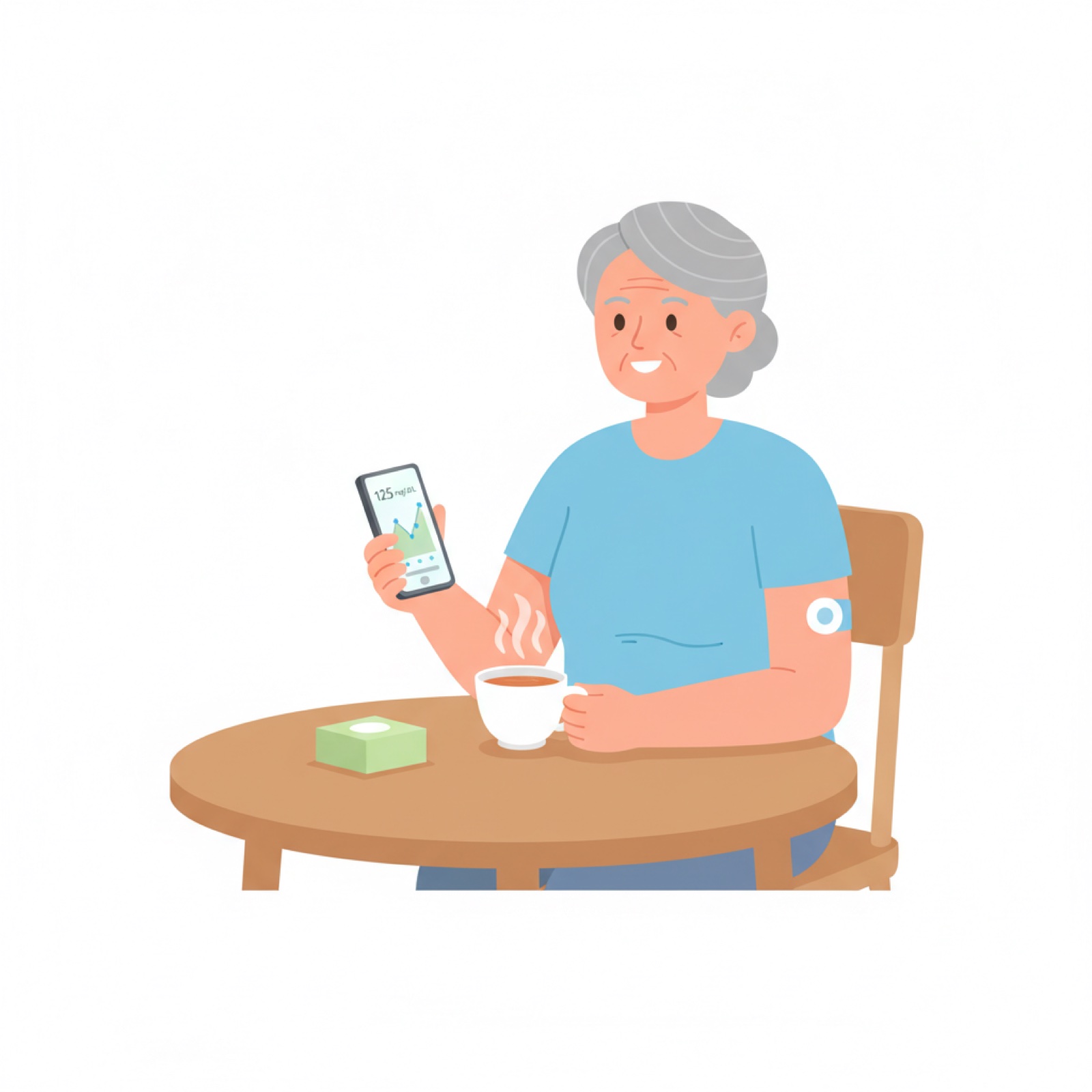
What it is
Type 2 diabetes is insulin resistance plus relative insulin deficiency, ~90% of all diabetes. Long considered a T1-only tool, CGM is now backed by MOBILE Trial and real-world data showing TIR gains and HbA1c reduction in insulin-treated T2D.
Where CGM changes the plan
Basal insulin titration
Overnight and morning trends — main drivers of uncontrolled hyperglycaemia — become visible. Adjusting basal by chart beats adjusting by fasting.
GLP-1 / SGLT2 titration
CGM reveals post-prandial effect and overall mean glucose drop — data for the continue / increase / switch decision.
Behavioural nudges
Seeing the spike after plov or a specific breakfast is the strongest visual argument for diet change. Works even with a short CGM course.
Hidden hypos on sulphonylureas
In patients aged 70+ on glibenclamide or gliclazide, night-time hypos are often asymptomatic. CGM catches them and supports a medication switch.
Syai's role
For T2D, either continuous wear (on insulin) or a periodic 14-day "diagnostic" run every 3 months — to check the glycaemic profile and adjust therapy — is usually enough. A single sensor covers both with nothing more than the patient's phone.
Studies
ADA Standards of Care 2024 — type 2 chapter
American Diabetes Association · Diabetes Care Suppl. 1 · 2024
On requestReal-world evidence: CGM in T2D — observational meta-analysis
Gilbert M.P. et al. · Diabetes Technology & Therapeutics · 2023
On request
Further reading
More on the manufacturer's site
Syai Health maintains a detailed topic page with clinical cases. Opens in a new tab.