
CGM for children and adolescents
ISPAD recommends CGM for every child with T1D, regardless of age or insulin-therapy form. Foremost benefit: reducing parental fear of hypoglycaemia.
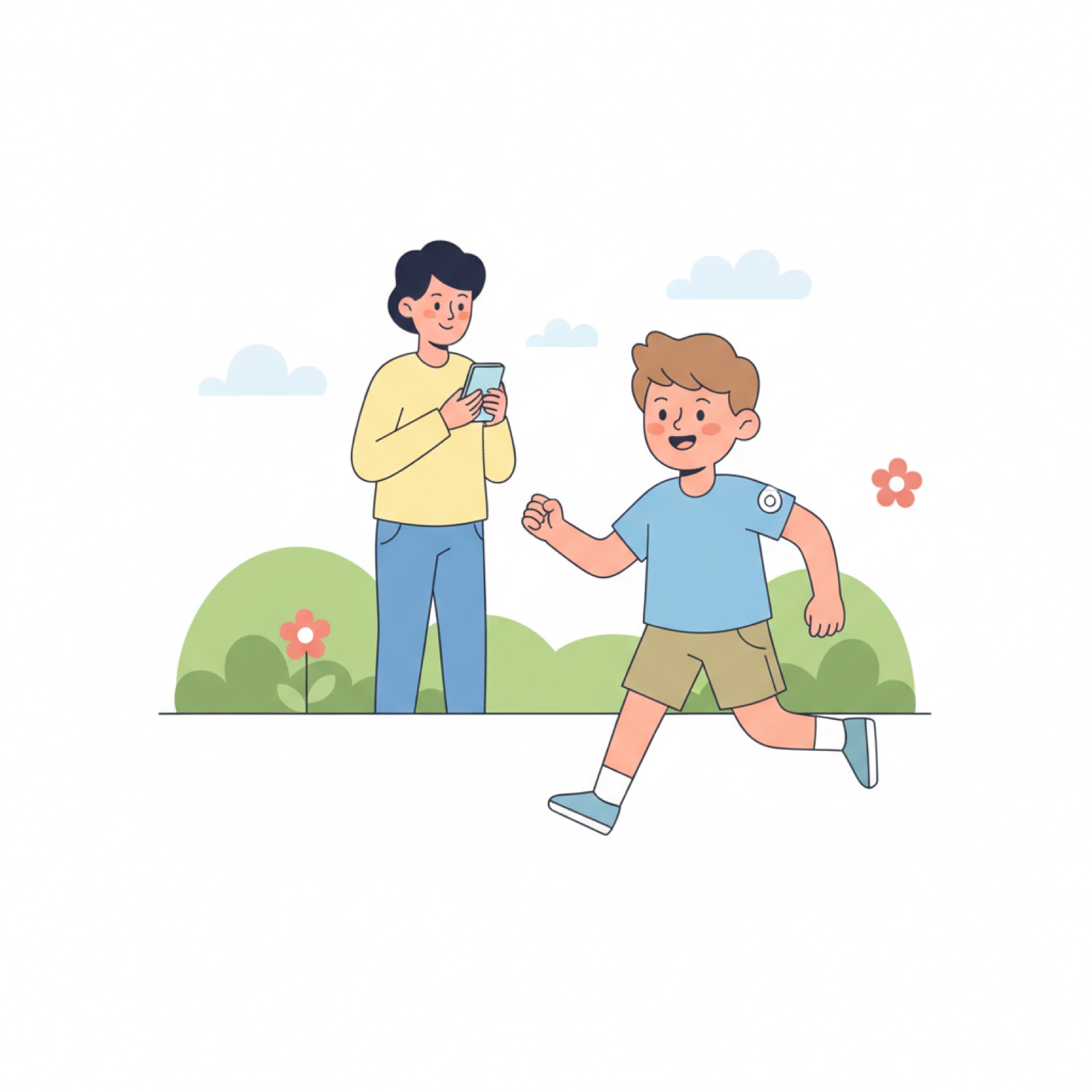
What it is
In children, T1D is the dominant form of diabetes (>95% of cases under 15). Key traits: small insulin doses, erratic appetite, unpredictable activity, long sleep — all of which drive high variability and night-time hypo risk.
Practical notes
Sharing with parents
Parents see real-time glucose on their own phone. Especially valuable for younger children and adolescents at school.
Low sensor profile
Sensor must be thin and flat — should not interfere at school, PE, or play. Children are very sensitive to body-attached devices.
Overnight alerts for parents
The core feature for parental sleep. Settings: urgent low 3.1 mmol/L, low 3.9.
School and caregiver
Share view-only access with the teacher or caregiver — they see glucose but not settings. Cuts parental phone calls.
Syai's role
35×5 mm size and flat shape are comfortable on a child's arm. 14 days per sensor means fewer "finger-stick days" per year. Sharing with the parent through the app is built-in. Urgent low alerts + automatic notifications to next of kin.
Studies
ISPAD Clinical Practice Consensus 2022 — CGM in paediatrics
Tauschmann M. et al. · Pediatric Diabetes · 2022
On requestCGM and fear of hypoglycaemia in caregivers — systematic review
Patton S.R. et al. · Diabetes Care · 2021
On request
Further reading
More on the manufacturer's site
Syai Health maintains a detailed topic page with clinical cases. Opens in a new tab.