CGM in pregnancy
Any form of diabetes in pregnancy needs a tighter target range. CGM makes that achievable.
What it is
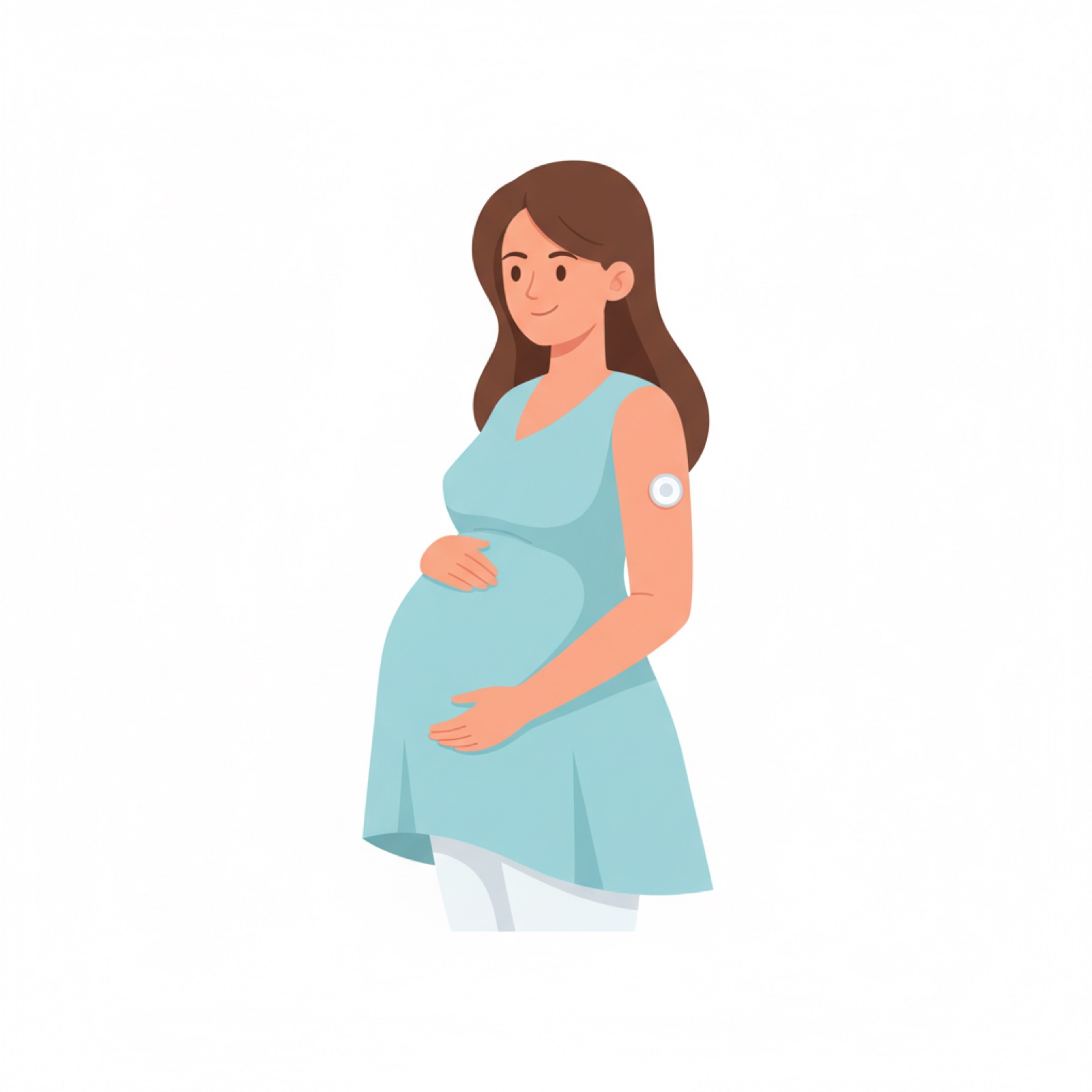
Gestational diabetes (GDM) is diabetes first diagnosed in pregnancy. By IADPSG/WHO 2013 criteria the prevalence is 10-20% in most countries. Pre-existing T1D and T2D also fall under "diabetes in pregnancy". The goal is to minimise macrosomia, preeclampsia and neonatal hypoglycaemia risk.
Pregnancy-specific targets
TIR
Time in range 3.5–7.8 mmol/L > 70%. Tighter than non-pregnant adults.
Fasting glucose
< 5.3 mmol/L pre-meal and fasting.
1 h post-meal
< 7.8 mmol/L per IADPSG criteria.
2 h post-meal
< 6.7 mmol/L in diabetes in pregnancy.
TBR
Time below 3.5 mmol/L < 4%. Maternal hypos are a stressor on the fetus.
Approach
Diagnosis by OGTT
Screen at 24-28 weeks with a 75 g OGTT. Early (first-trimester) screen for at-risk women.
Diet + physical activity
First line. 70–80% of GDM cases compensate with lifestyle and no insulin.
Insulin — the standard
If 1-2 weeks of diet is not enough. Metformin is an option in some protocols, but insulin remains first-line in most guidelines.
CGM from the moment insulin starts
CONCEPTT (Lancet 2017) showed a 50% drop in neonatal complications among CGM-using T1D pregnancies. Extension to GDM is in current guidelines.
Syai's role
Syai can be worn from diagnosis through delivery. MARD < 10% accuracy meets the insulin-dosing requirement for CGM in pregnancy. No finger-stick checks is a separate gain on top of the existing exam burden. Post-delivery, the same sensor screens for residual diabetes.
Studies
IADPSG diagnostic criteria for hyperglycemia in pregnancy
International Association of Diabetes and Pregnancy Study Groups · Diabetes Care · 2010
On request
Further reading
More on the manufacturer's site
Syai Health maintains a detailed topic page with clinical cases. Opens in a new tab.