Type 2 diabetes on oral antidiabetic drugs
Paired pre/post-meal readings are the most underused SMBG tool in T2D. They show the effect of a specific drug on a specific meal on a specific day.
Where the glucometer fits
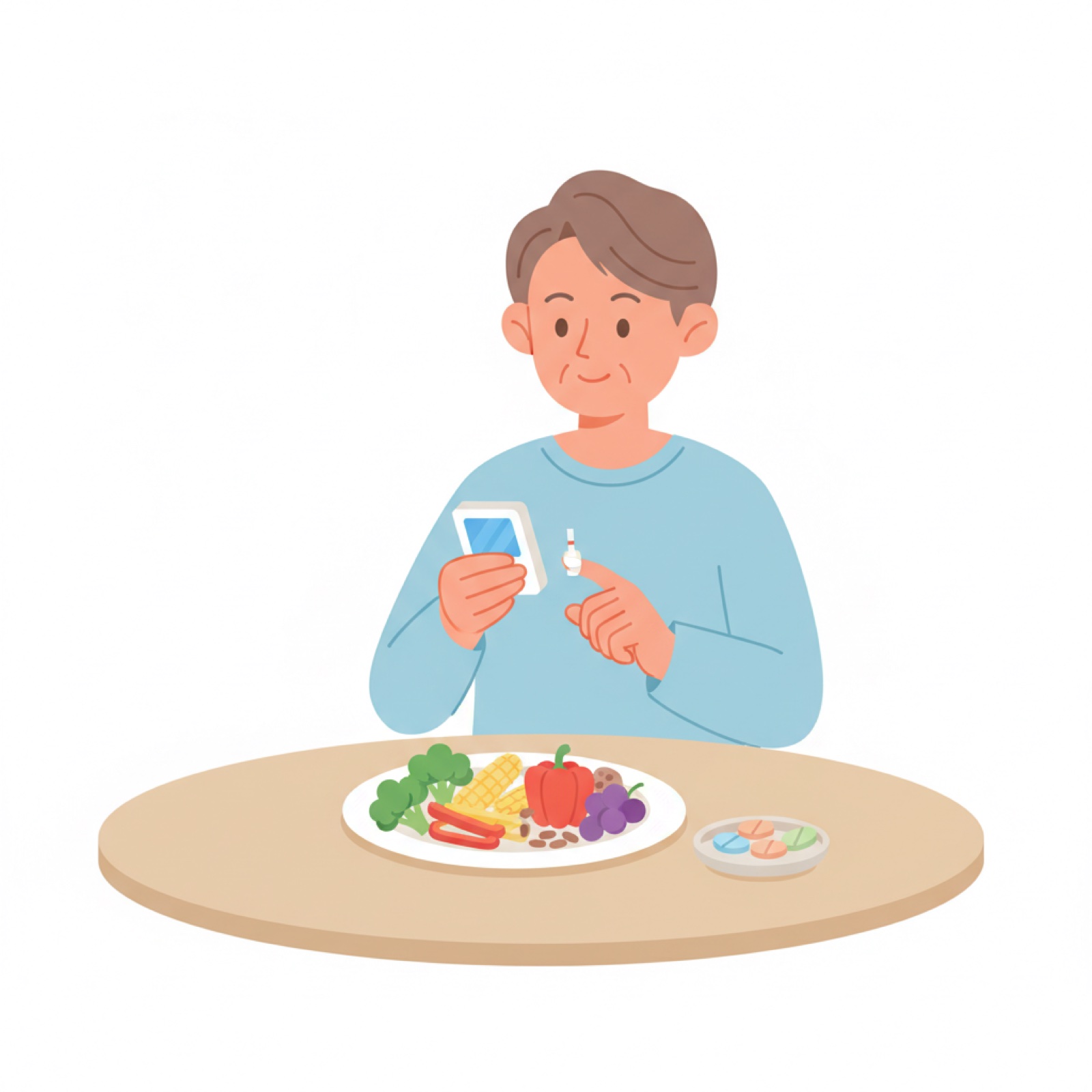
T2D on metformin, sulfonylureas, DPP-4, SGLT-2 or GLP-1 doesn't need dense daily SMBG. ADA recommends structured SMBG — a few targeted readings per week to spot trends and treatment effects. Cheaper, easier and more effective than "six readings every day".
Structured SMBG — a working scheme
Paired readings three times a week
Mon — breakfast, Wed — lunch, Fri — dinner. Before-meal + 2 hours after. Rotate meals — three weeks gives a full picture.
Profile day every 2 weeks
Seven readings — fasting, before and 2 h after each meal, at bedtime. Print the sheet for your endocrinologist.
Reading when starting a new drug
First two weeks on a new tablet — paired readings daily. Reveals descent dynamics and hypo risk on sulfonylureas.
Symptom-driven readings
Weakness, hunger, tremor, vague fatigue — measure. Repeatedly below 4.0 — discuss switching the oral agent with your doctor.
One device — three family members
iXell supports individual lancets for each family member. The 500-reading memory keeps your data separate from relatives' — useful when diabetes runs in the family. A monthly control-solution test confirms the device hasn't drifted.
References
STeP trial — structured SMBG reduces HbA1c in non-insulin-treated T2D
Polonsky W.H. et al. · Diabetes Care · 2011
On requestCochrane Review — SMBG in non-insulin T2D
Malanda U.L. et al. · Cochrane Database of Systematic Reviews · 2012
On request