Type 1 diabetes on intensive insulin therapy
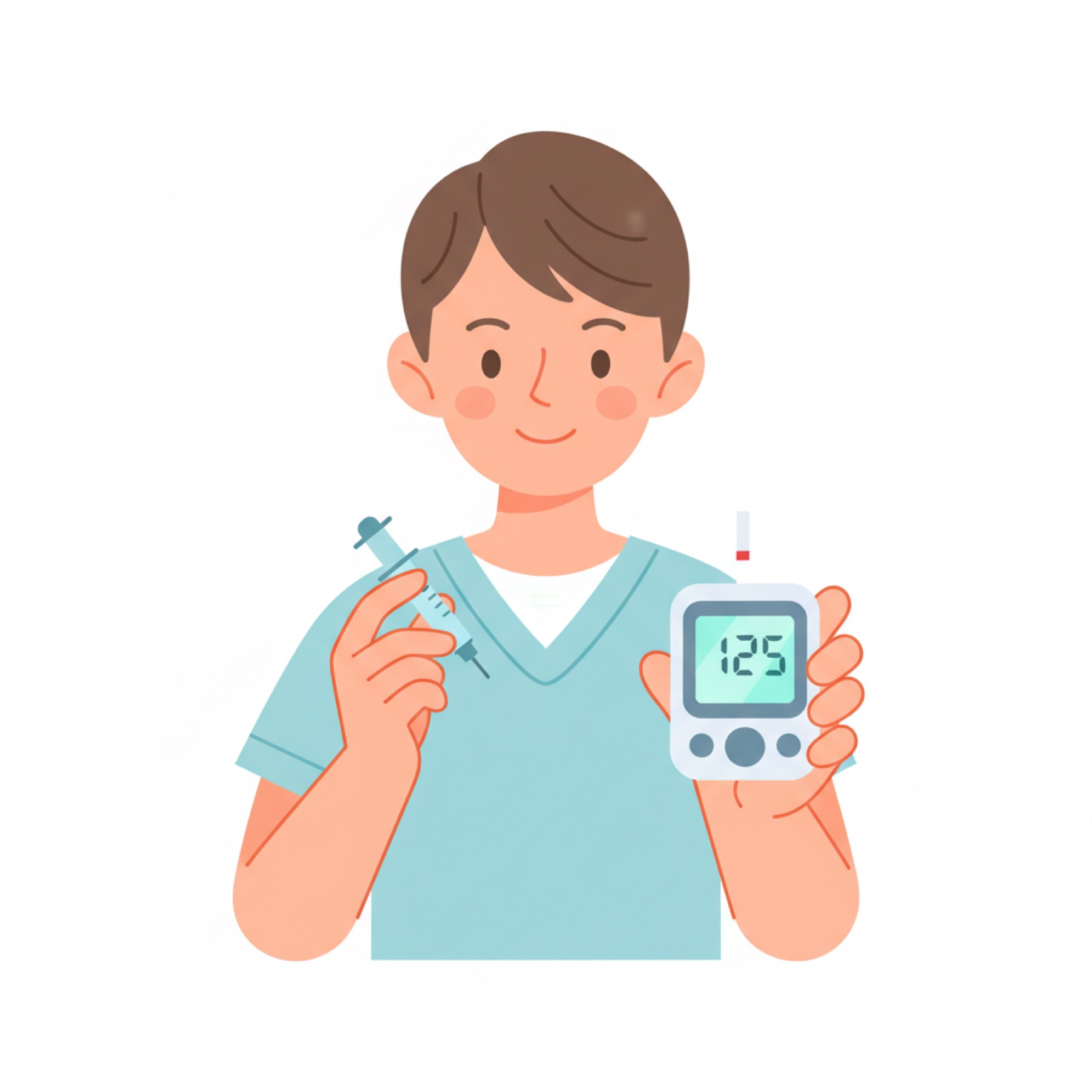
In T1D every correction decision relies on a glucometer reading. EN ISO ±15% accuracy is the floor — below it, insulin is dosed by feel.
Context
T1D is autoimmune β-cell destruction. No endogenous insulin — lifelong exogenous replacement is required. ADA 2024 frames intensive therapy as basal + a bolus per meal + hyperglycemia correction. CGM is becoming standard of care, but a glucometer remains essential for confirmation in ambiguous situations.
ADA / ISPAD targets
Fasting
4.4–7.2 mmol/L for most adults; tighter or looser based on hypo risk.
2 h post-meal
< 10.0 mmol/L. Helps assess whether the insulin-to-carb ratio is right.
HbA1c
< 7.0% with minimal hypoglycemia. Tight targets only with preserved hypo awareness.
TBR (if on CGM)
Time below 3.9 — < 4%. Time below 3.0 — < 1%. The glucometer confirms CGM in ambiguous readings.
Measurement protocol
Before every meal
10–15 min before eating — calculate the bolus from the current level plus the meal's carbohydrates.
2 hours after the meal
Check whether the bolus was right. A spike above 10 mmol/L means the bolus was too small or given too late.
At bedtime
Target 6.0–8.3 mmol/L — below 5.5 consider a bedtime snack to protect against nocturnal hypo.
Always at hypo symptoms
Tremor, sweating, hunger, confusion — don't interpret, measure. A confirmed hypo needs 15 g of carbohydrate and a repeat reading in 15 minutes.
Accuracy and speed when it matters most
iXell delivers a result in 5 seconds — critical for suspected nocturnal hypo or behind the wheel. EN ISO 15197:2015 compliance means 95% of readings at ≥ 5.55 mmol/L are within ±15% of the lab value, and below 5.55 within ±0.83 mmol/L. That's enough to act on for insulin correction.
References
DCCT — intensive insulin therapy and long-term complications in T1D
DCCT Research Group · New England Journal of Medicine · 1993
On requestADA Standards of Care 2024 — glucose monitoring in T1D
Diabetes Care · 2024
On request