
Sport and physical activity with diabetes
Exercise raises insulin sensitivity for 24+ hours. That means a reading before sport, 30 minutes after, and at 03:00 the same night are three different stories — each demanding its own decision.
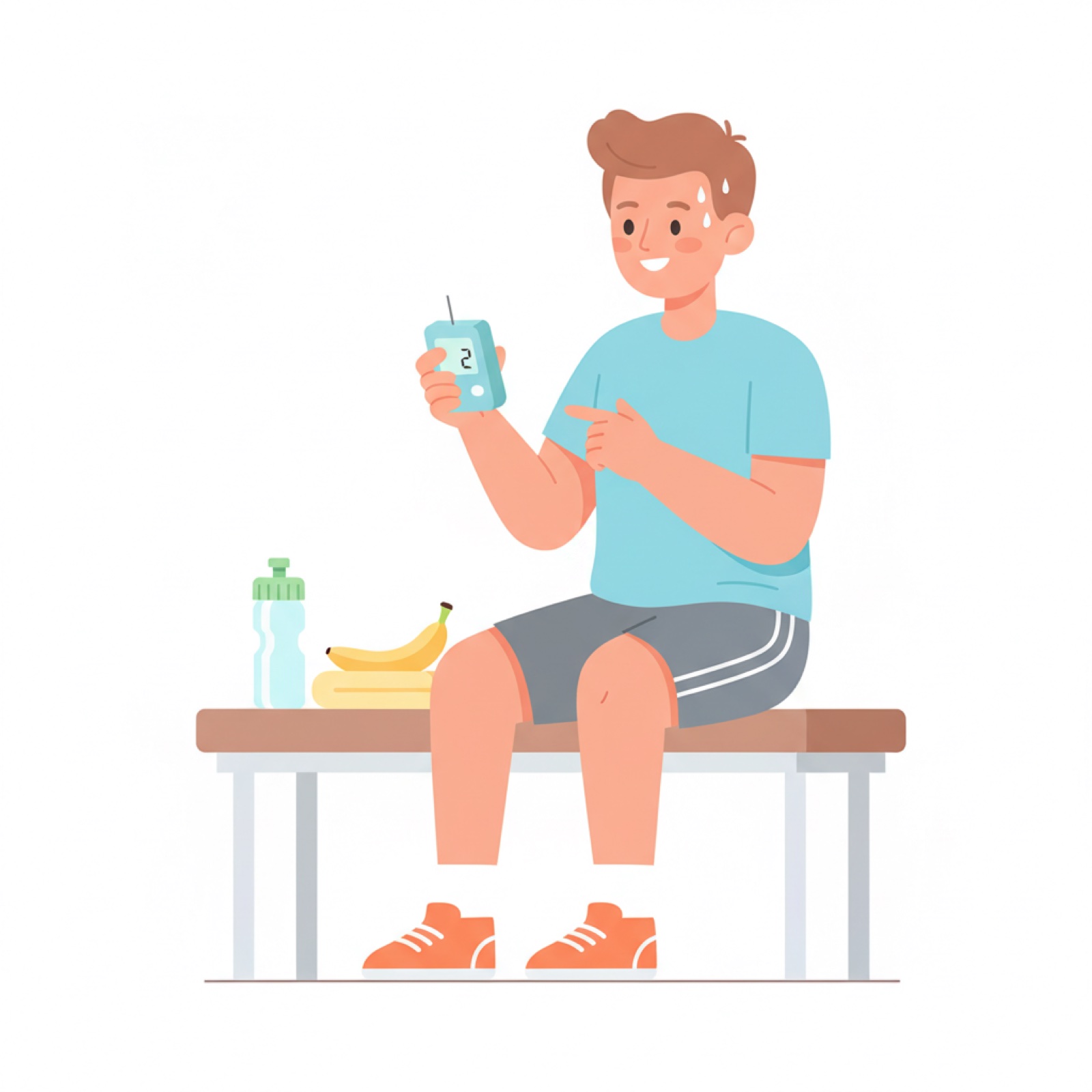
How exercise affects glucose
Aerobic exercise (running, swimming, cycling) usually lowers glucose — muscles burn fuel without insulin mediation. Anaerobic effort (lifting, sprints) can transiently raise it via counter-regulatory hormones. In insulin-treated patients, delayed hypoglycemia 6–24 hours after exercise is the main risk. ADA 2024 recommends a measurement protocol around any significant activity.
Measurement protocol around exercise
30 minutes before start
Target corridor 5.5–10.0 mmol/L. Below 5.5 — 15–20 g of carbohydrate before training. Above 14 with ketones — postpone the session.
Sessions over 60 minutes — pause for a reading
Especially for long aerobic work (running, cycling). A 30-second pause costs less than a mid-session hypo.
30–60 minutes after
Below 5.5 — carb in. Near normal — keep watching: hypo may arrive hours later.
At bedtime after a training day
Bedtime < 6.5 — a complex-carb snack (bread + cheese, nuts + banana). Insulin-treated patients should set an alarm for 03:00 after a first evening session or a new long workout.
Speed and portability
5 seconds to result is the difference between "finish the workout" and "stop now". iXell is compact — fits in a sports-bag pocket or a running belt. A minimum 0.6 μL drop matters when hands are sweaty or cold and a large drop won't come. The 500-reading memory keeps a separate training-day dataset for the conversation with your endocrinologist about basal adjustments.
References
ADA Position Statement — physical activity and diabetes
Colberg S.R. et al. · Diabetes Care · 2016
On requestISPAD 2022 — exercise in children and adolescents with diabetes
Pediatric Diabetes · 2022
On request