
Children and adolescents with diabetes
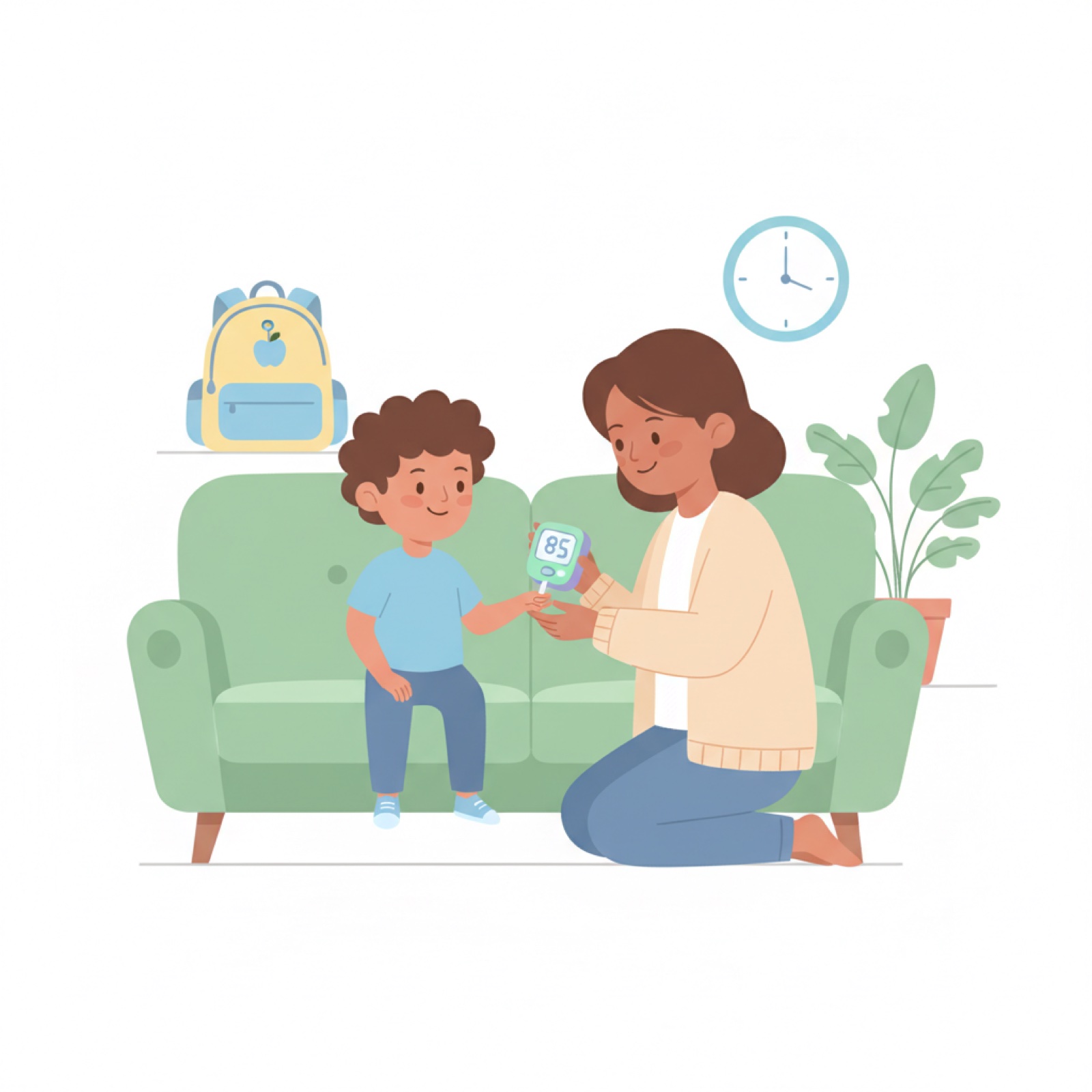
For a child with diabetes, monitoring is family work. Under 8, parents do everything; 8–14, supervised learning; 14+, the teenager is autonomous but the family stays informed. ISPAD sets specific targets for each stage.
Paediatric particularities
T1D is the most common form in children; T2D is occasional in obese adolescents. ISPAD 2022 sets HbA1c < 7.0% with minimal hypoglycemia. Particularities: growth, puberty hormone surges, school, sport, the fear of being different from peers — all of this shapes the SMBG plan.
Protocol by age
0–6 years: parent does everything
4–6 readings/day: before meals, at bedtime, once a week at 03:00 (nocturnal hypo check). Targets are gentler — HbA1c < 7.5% because of unrecognised hypo risk.
7–12 years: supervised training
The child learns to lance themselves; the parent checks the reading and chooses the dose. By the end of the period — independent post-meal readings at school. A care plan goes to the school nurse.
13–17 years: autonomy + supervision
The teenager measures themselves and adjusts insulin. The parent reviews summary stats weekly — without pressure. The risk at this age is losing control because of rebellion against rules.
A school care plan is essential
Written plan with the principal and nurse: where the meter is stored, who helps with readings, what to do in a hypo, parent contacts. Device and strips — two sets (home + school).
Small blood sample size — critical for children
A small finger can't yield a large drop. iXell's 0.6 μL is among the lowest in class; easier for the child, shallower lancing. Button-eject of the strip — the parent doesn't touch used material. The 500-reading memory is enough to bring 2 months of data to a clinic visit.
References
ISPAD Clinical Practice Consensus Guidelines 2022
Pediatric Diabetes · 2022
On requestT1D Exchange — real-world SMBG practice in paediatric T1D
Foster N.C. et al. · Diabetes Technology & Therapeutics · 2019
On request