
Self-monitoring after a new T2D diagnosis
The first 3–6 months are a learning period: how your body responds to food, movement, stress and sleep. iXell readings give you the language to speak with your endocrinologist.
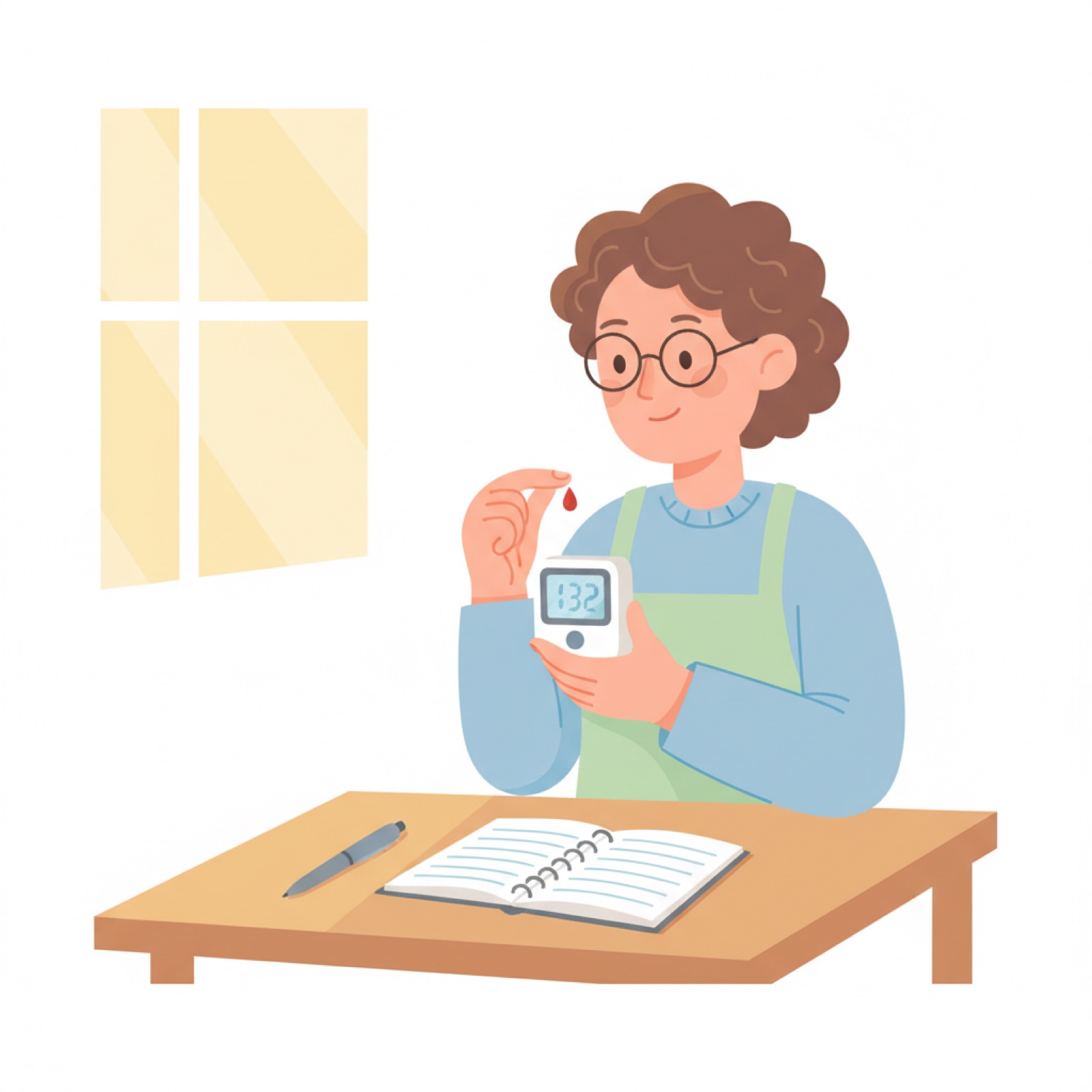
What it means
Type 2 diabetes is impaired tissue sensitivity to insulin; the pancreatic β-cells eventually tire of compensating. ADA 2024 sets the diagnostic threshold at HbA1c ≥ 6.5%, fasting glucose ≥ 7.0 mmol/L, or ≥ 11.1 mmol/L 2 h after an OGTT. Self-monitoring in the first months isn't about dose adjustment — it's about pattern recognition.
Target values per ADA 2024
HbA1c
Standard target < 7.0%. Older adults or with significant comorbidities — relaxed (7.5–8.0%).
Fasting
4.4–7.2 mmol/L on stable therapy. Individual targets during intensification.
2 h post-meal
< 10.0 mmol/L for most adults. Useful guidepost for tuning carbohydrate portion sizes.
Bedtime
6.0–8.3 mmol/L if there's nocturnal hypo risk — especially on insulin or sulfonylureas.
Measurement protocol in the first months
Paired pre/post-meal readings
Before-meal reading + 2 hours after. A delta > 3.0 mmol/L means the carb portion was too large; under 1.0 mmol/L means the portion is well-matched.
Profile day every 1–2 weeks
Seven readings: fasting, before and 2 h after each meal, at bedtime. Gives the full picture for therapy adjustments.
Keep a diary for the first 90 days
A number without context is useless. Log what you ate, step count, sleep. Patterns become obvious after a month.
Monthly control-solution check
Run the iXell control solution. Rules out "the device is wrong" as a cause if readings look unexpected.
Why accuracy matters most at this stage
In the first months, you and your endocrinologist make decisions on glucometer numbers. If the device isn't EN ISO 15197:2015 compliant, a ±30% error is real — meaning the diet you tune, the metformin dose, the decision to add insulin all rest on shaky ground. iXell is EN ISO certified, and the control solution in the box is your insurance.
References
Structured SMBG (STeP trial) — efficacy in T2D
Polonsky W.H. et al. · Diabetes Care · 2011
On request