
Elderly patients with T2D
In the elderly the main risk isn't hyperglycemia but hypoglycemia. Falls, fractures, altered consciousness happen far more often than long-term complications from an 8.0% HbA1c. Targets are looser, the protocol is simpler, the emphasis is safety.
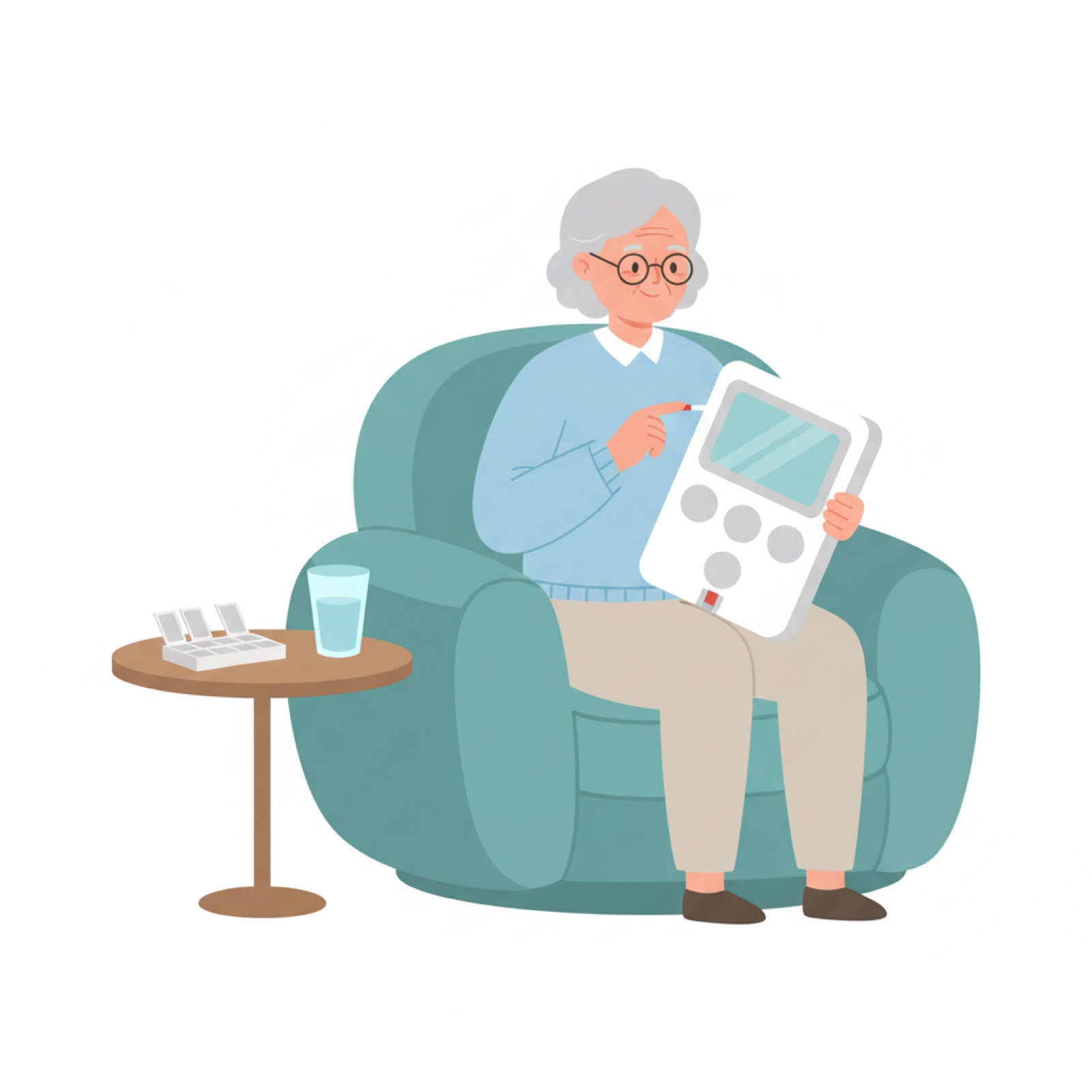
Approach in the elderly
ADA 2024 splits older adults into three groups: healthy (few chronic conditions, intact cognition) — HbA1c < 7.5%; with complications (≥ 3 chronic, ADL limits) — < 8.0%; very complex (end-stage disease, severe cognitive impairment) — < 8.5%. Glibenclamide in patients 70+ with CKD is essentially contraindicated — half-life too long, hypoglycemia becomes uncontrollable.
A safe measurement protocol
Fasting 2–3 times a week
Enough for control without overload. Daily readings are excess stress and strip cost without clinical benefit.
On hypo symptoms — mandatory
Weakness, dizziness, sweating, confusion — measure. In older adults symptoms can be atypical and be confused with age-related dementia or stroke.
Family support
If vision or coordination are impaired, let a relative or carer do the lancing and application. iXell's large display reads well even without glasses.
Post results on the fridge
A simple paper table — day, time, number — on the fridge. When the ambulance or family doctor arrives, the picture in 10 seconds saves hours of workup.
Simplicity over features
No-coding (eliminates a common user error in older adults), a large strip-ejection button (easier for tremor), large display digits, 5-year warranty. The control solution in the box lets a relative verify the device monthly without a store visit.
References
ADA Standards of Care 2024 — Older Adults
Diabetes Care · 2024
On requestHypoglycemia and the risk of falls and fractures in elderly T2D
Johnston S.S. et al. · Endocrine Practice · 2014
On request