
Traumatic wound care
Abrasions, lacerations, skin tears, injuries outside the OR — primary and topical care.
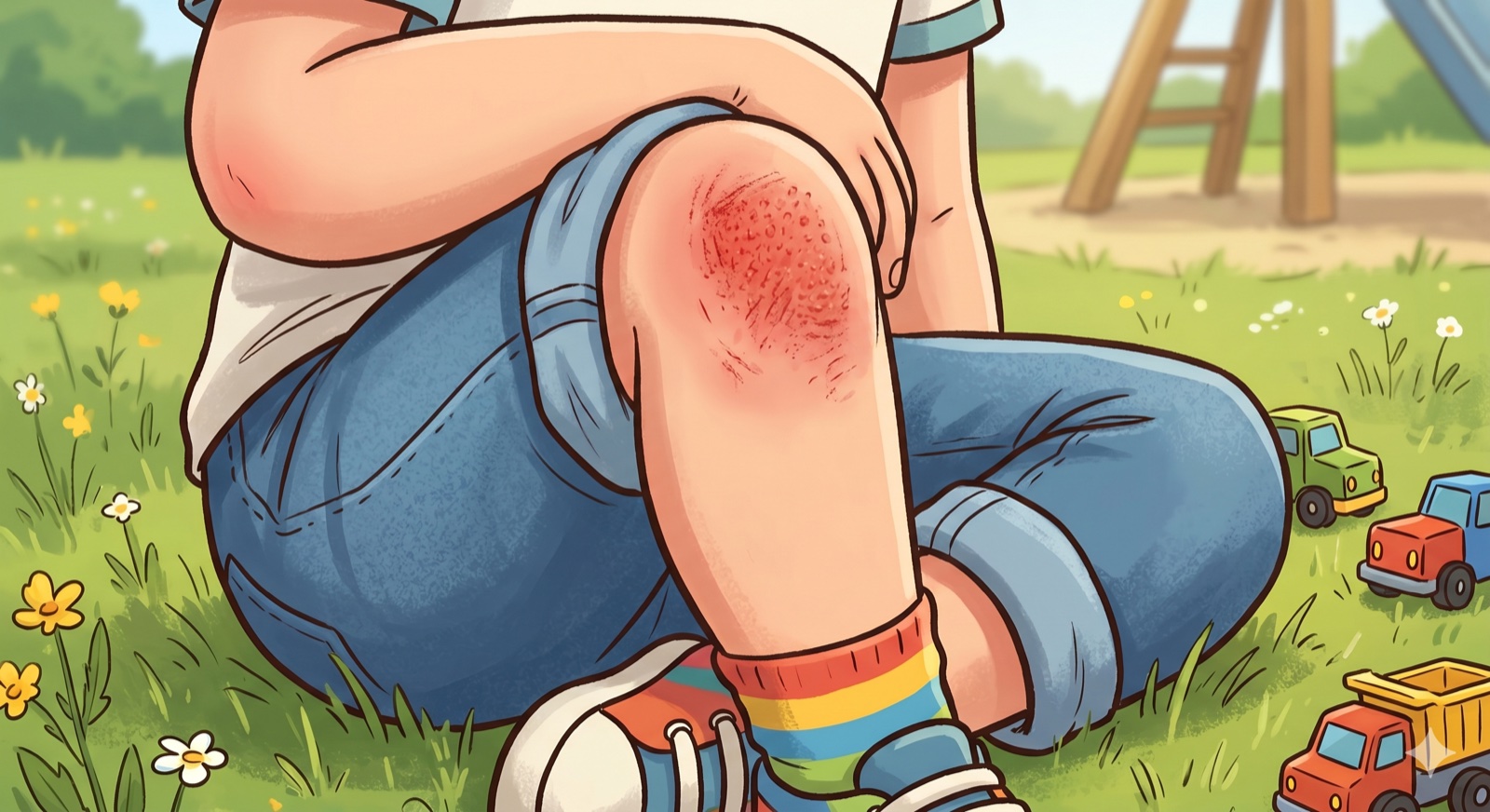
What it is
Traumatic wounds — a sudden break in skin and underlying tissue from mechanical, thermal or chemical injury outside an elective surgical procedure. They include abrasions, lacerations, avulsions, skin tears in older patients, bites, and penetrating injuries.
What it looks like in practice
1 real-world cases from clinics using Flaminal® — before/after photos, treatment protocol, and healing timelines.
Real clinical cases from the practice of partner clinics using Flaminal® in Uzbekistan. Patient personal data is not published.
Initial care principles
Cleansing and assessment
Pressure irrigation with sterile saline. Remove foreign bodies and non-viable tissue.
Closure decision
Clean wound < 6 hours — primary closure. Contaminated, bites, > 6 hours — delayed primary closure or secondary intention.
Tetanus and rabies prophylaxis
Per local protocol. Animal bites — rabies risk assessment, start vaccination.
Topical therapy
Moist environment, microbial-load control. Dressing changes paced to exudate volume.
Flaminal®'s role
Flaminal® fits traumatic wounds managed by secondary intention. Antibiotic-free microbial control is especially useful in wounds with elevated contamination risk. The atraumatic gel removes the repeat-trauma element of dressing changes.
Flaminal Hydro
Abrasions, superficial scrapes, low exudate.
Flaminal Forte
Moderate to heavy exudate.
Studies
ATLS Wound management module
American College of Surgeons · ATLS, 10th edition · 2018
On requestISTAP Best Practice Recommendations for the Management of Skin Tears
LeBlanc K. et al. · Advances in Skin & Wound Care · 2018
On request
Further reading
More on the manufacturer's site
Flen Health maintains a detailed topic page with clinical cases. Opens in a new tab.