
Diabetic foot ulcer care
Ulcerative lesions in diabetic patients: Wagner classification, multidisciplinary approach, and the role of modern dressings.
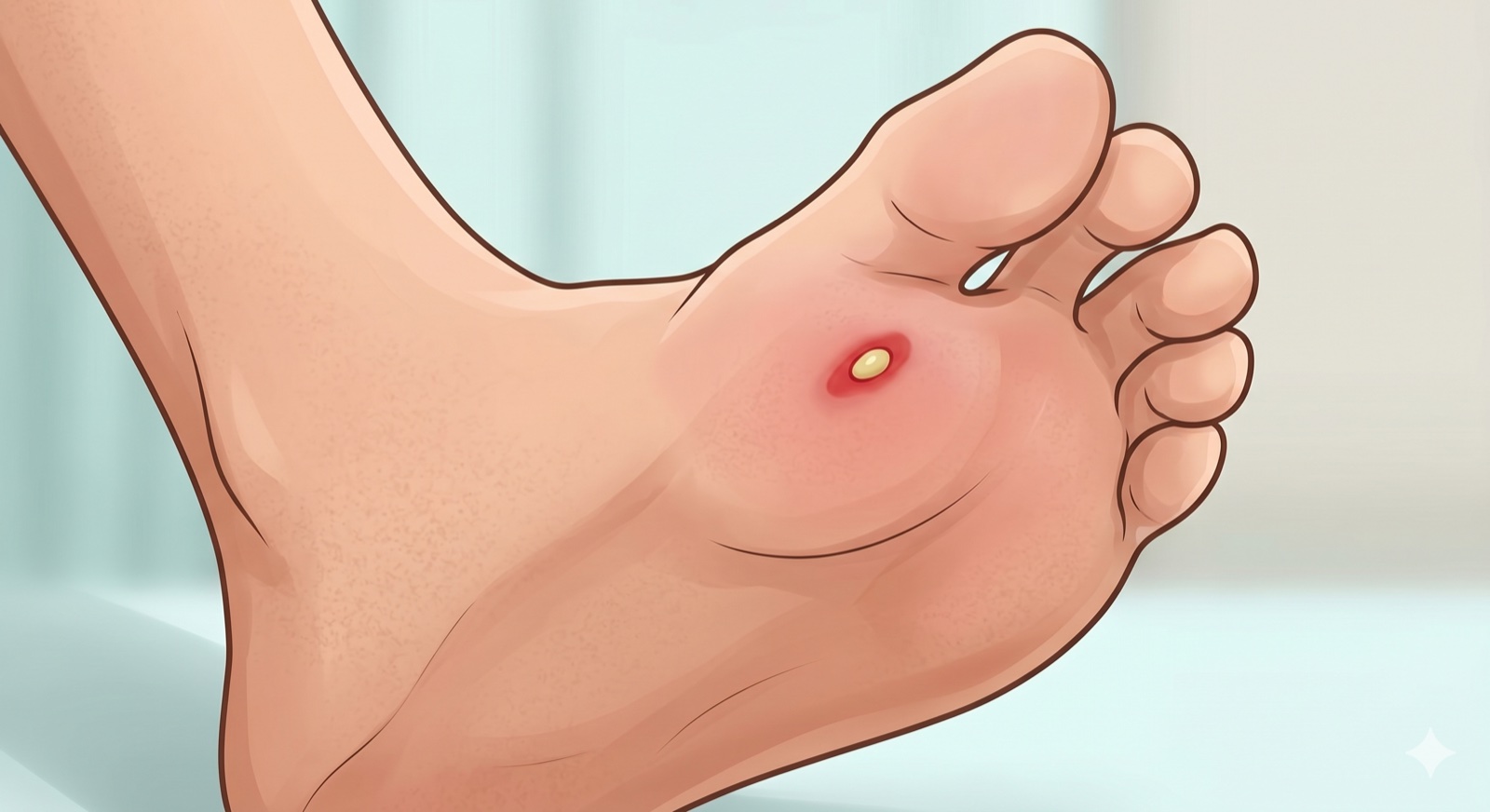
Diabetic foot
Diabetic foot syndrome (DFS) is damage to nerves, vessels and tissues of the foot in diabetic patients, leading to ulcers, infection and amputation risk. The IDF estimates 19–34% of people with diabetes will develop a foot ulcer in their lifetime.
What it looks like in practice
4 real-world cases from clinics using Flaminal® — before/after photos, treatment protocol, and healing timelines.
Real clinical cases from the practice of partner clinics using Flaminal® in Uzbekistan. Patient personal data is not published.
Wagner classification
Meggitt–Wagner scale (F.W. Wagner Jr., 1981) — international system for grading diabetic foot ulcer depth. Six grades from 0 (at-risk foot) to 5 (whole-foot gangrene). Drives both management and prognosis.
Wagner 0
High-risk foot without an open wound — deformities, callus, pre-ulcerative changes.
Wagner 1
Superficial ulcer without involvement of deeper structures.
Wagner 2
Deep ulcer extending to tendon, capsule or bone — without osteomyelitis.
Wagner 3
Deep ulcer with abscess or osteomyelitis.
Wagner 4
Localised gangrene (toes, forefoot).
Wagner 5
Gangrene of the entire foot — high amputation indicated.
Treatment principles per IWGDF
IWGDF — International Working Group on the Diabetic Foot (within IDF since 1996). Publishes consensus clinical guidelines every four years. The 2023 edition is current.
Offloading
Total Contact Cast or removable cast walker is the gold standard for neuropathic plantar ulcers.
Glycaemic control
HbA1c < 7.5% and stable daily profiles — hyperglycaemia slows fibroblast migration and angiogenesis.
Perfusion assessment
Pulse palpation, ABI, TcPO2. In critical ischaemia, angiography and revascularisation precede local therapy.
Debridement and topical treatment
Surgical debridement for slough and callused edges. Moist environment with exudate and microbial-load control.
Flaminal®'s role
The Flaminal® form for diabetic foot ulcers is decided by exudate volume only: dry or scant-exudate ulcer → Hydro, moderate-to-heavy exudate → Forte. The alginate matrix absorbs exudate; the enzyme system gently lyses necrosis and fibrin without damaging healthy tissue — identical in both formulas. Painless dressing changes matter for neuropathy patients — returning sensation should not be met with dressing-change pain.
Flaminal Forte
Moderate to heavy exudate.
Flaminal Hydro
Low exudate after successful debridement.
Studies
Flaminal® Forte in diabetic foot syndrome — a prospective study
Van den Plas D. et al. · Journal of Wound Care · 2018
On requestIWGDF Guidelines on the prevention and management of diabetic foot disease
International Working Group on the Diabetic Foot · IWGDF · 2023
NICE Guideline NG19 — Diabetic foot problems: prevention and management
National Institute for Health and Care Excellence · NICE · 2023
Further reading
More on the manufacturer's site
Flen Health maintains a detailed topic page with clinical cases. Opens in a new tab.