
Partial-thickness burn management
ABA-classified first- and second-degree burns: depth assessment, burn area, and dressing choice.
What it is
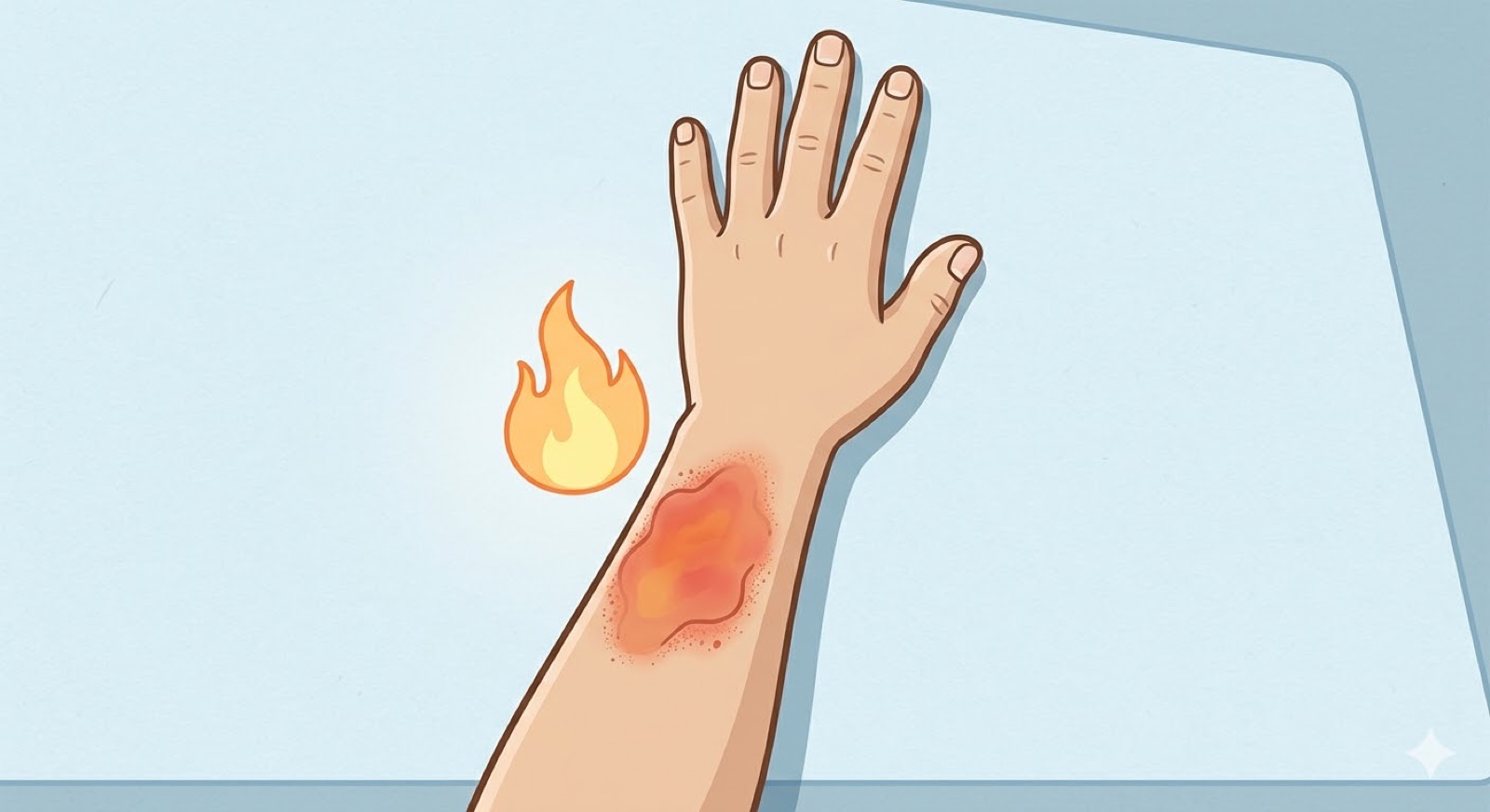
A burn is tissue damage from thermal, chemical or electrical injury. Depth is defined by involvement of epidermis (first degree), epidermis and superficial dermis (IIa), deep dermis (IIb) or underlying tissues (third degree). The ABA classification builds on this grading and total body surface area (TBSA).
What it looks like in practice
3 real-world cases from clinics using Flaminal® — before/after photos, treatment protocol, and healing timelines.
Real clinical cases from the practice of partner clinics using Flaminal® in Uzbekistan. Patient personal data is not published.
Burn depth
First-degree
Superficial epidermal burn. Erythema, pain, no blisters. Heals in 3–6 days without scarring.
IIa (superficial partial-thickness)
Epidermis and superficial dermis. Blisters, pain, moist pink bed. Heals in 7–14 days.
IIb (deep partial-thickness)
Deep dermis. Pale pink or white bed, reduced sensation. Heals in 3+ weeks or requires grafting.
Third-degree
Full-thickness — all skin layers plus underlying tissue. Painless white or charred bed. Requires surgery and grafting.
Treatment principles
Severity assessment
TBSA by the rule of nines, depth by clinical appearance. TBSA ≥ 10% (≥ 5% in children) or burns of face, hands, perineum, or circumferential burns warrant hospitalisation.
Initial wound care
Cool water 20–30 minutes (within the first 3 hours). Deroof blisters > 6 cm. Avoid ice and oil-based dressings.
Moist, silver-free environment
Modern alginate/gel dressings. Silver sulfadiazine, long the standard, has fallen behind atraumatic gels on epithelialisation speed in recent reviews.
Procedural analgesia
Paracetamol ± weak opioid 30–60 minutes before changes. Atraumatic gel lowers the need for procedural sedation.
Flaminal®'s role
Flaminal® is approved for first- and second-degree burns. The gel maintains a moist environment, controls microbial load without silver, and does not adhere to the wound — important for children and adults with extensive burns where dressing changes become daily trauma.
Flaminal Hydro
First and IIa — low to moderate exudate.
Flaminal Forte
Heavy exudate.
Studies
Efficacy of Flaminal® in second-degree burns — randomized trial
Hoeksema H. et al. · Burns · 2016
On requestABA Clinical Practice Guidelines for burn care
American Burn Association · Journal of Burn Care & Research · 2020
Modern approaches to burn dressing change — review
Barret J.P., Vana G. et al. · Burns Open · 2020
On request
Further reading
More on the manufacturer's site
Flen Health maintains a detailed topic page with clinical cases. Opens in a new tab.